- Chinese
- French
- German
- Portuguese
- Spanish
- Russian
- Japanese
- Korean
- Arabic
- Irish
- Greek
- Turkish
- Italian
- Danish
- Romanian
- Indonesian
- Czech
- Afrikaans
- Swedish
- Polish
- Basque
- Catalan
- Esperanto
- Hindi
- Lao
- Albanian
- Amharic
- Armenian
- Azerbaijani
- Belarusian
- Bengali
- Bosnian
- Bulgarian
- Cebuano
- Chichewa
- Corsican
- Croatian
- Dutch
- Estonian
- Filipino
- Finnish
- Frisian
- Galician
- Georgian
- Gujarati
- Haitian
- Hausa
- Hawaiian
- Hebrew
- Hmong
- Hungarian
- Icelandic
- Igbo
- Javanese
- Kannada
- Kazakh
- Khmer
- Kurdish
- Kyrgyz
- Latin
- Latvian
- Lithuanian
- Luxembou..
- Macedonian
- Malagasy
- Malay
- Malayalam
- Maltese
- Maori
- Marathi
- Mongolian
- Burmese
- Nepali
- Norwegian
- Pashto
- Persian
- Punjabi
- Serbian
- Sesotho
- Sinhala
- Slovak
- Slovenian
- Somali
- Samoan
- Scots Gaelic
- Shona
- Sindhi
- Sundanese
- Swahili
- Tajik
- Tamil
- Telugu
- Thai
- Ukrainian
- Urdu
- Uzbek
- Vietnamese
- Welsh
- Xhosa
- Yiddish
- Yoruba
- Zulu
- Kinyarwanda
- Tatar
- Oriya
- Turkmen
- Uyghur



What is coal tar made from?
2026-01-10
Let’s cut to the chase—coal tar is an incredibly complex substance, arising from high-temperature carbonization. Often mistaken for a singular compound, it’s actually a medley of many. Often, this confounds even industry insiders who misunderstand its origins. In this piece, I’ll break down its composition, drawing from years of firsthand experience.
The Origin of Coal Tar
Coal tar is derived from the destructive distillation of bituminous coal. When coal is heated in the absence of air, it undergoes pyrolysis, breaking down into gaseous volatiles and coal tar. This process is integral to the production of coke, and the tar is essentially a byproduct.
It’s a dark, viscous liquid full of complexity. My first encounter with coal tar was in a steel plant. We would extract it in the byproducts section, a potent reminder of the myriad chemicals hidden within a simple block of coal.
Oftentimes, the sheer variety of compounds—from phenols to polycyclic aromatic hydrocarbons—can overwhelm. When I was new to this, uncovering its detailed composition felt akin to unlocking a chemical enigma.
Composition and Complexity
Approximately, coal tar consists of thousands of organic compounds. From naphthalene to benzene derivatives, its complexity is challenging. I recall visiting Hebei Yaofa Carbon Co., Ltd., a notable carbon manufacturer in China. Their insights into carbonization were enlightening, especially their grasp of using these compounds in carbon additives. You can check them out at Hebei Yaofa Carbon Co., Ltd. for their deep expertise.
Not all tars are made equal. Variations in coal type and carbonization temperature can shift its chemical profile. In practical terms, this affects its industrial applications, from roofing to pharmaceuticals.
Every time I worked with coal tar, I noticed nuances in its texture and aroma, often indicators of specific compositions. Years of experience have taught me to trust these sensory signals.
Industrial Applications
Due to its complex structure, coal tar finds itself universally useful yet specific in application. In my tenure, I’ve observed its usage ranging from sealants to antiseptic agents.
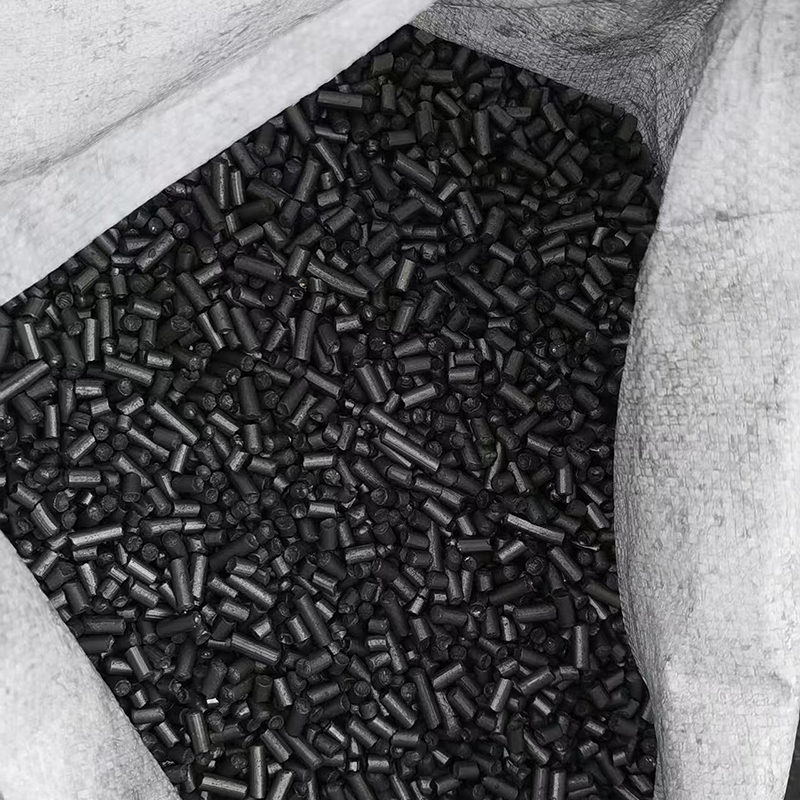
It’s intriguing to note how coal tar plays a role in producing carbon products, such as what Hebei Yaofa Carbon Co., Ltd. offers in carbon additives, utilizing the properties of tar to refine products like CPC and GPC.
The nuances of coal tar, specific to each batch or process, empower industries with a range of possibilities but also demand respect for its potent chemical makeup.
Challenges in Handling Coal Tar
Handling coal tar is not without risks. Skin irritations and more severe health concerns accompany improper handling. Early in my career, I encountered the challenges of dealing with its pungent aroma and potential hazards.
Hebei Yaofa Carbon Co., Ltd. has illustrated safe practices in managing carbon additives. Their approach reminded me of how essential safety is when working with such a complex, potent substance.
Effective methods, like proper ventilation and protective gear, remain non-negotiable. It’s less glamorous than the chemical intrigue, but critical to operational integrity.
The Future of Coal Tar
The industry has come a long way since I first dipped my hands into coal tar. Advancements in technology are bound to unlock even more potential in this enigmatic substance. Hebei Yaofa Carbon Co., Ltd., with their established history in carbon materials, contributes significantly to this evolution.
Interestingly, as environmental considerations grow, there’s potential for coal tar to pivot into more sustainable applications. We’re continually seeing how waste products transform into valuable resources with the right know-how.
Thus, the story of coal tar is far from over. As we deepen our understanding, this byproduct of an ancient fuel source holds promise for the future—a fascinating journey that’s just beginning to unfold.